How to Build a Trading Journal for Beginners
A beginner-friendly guide to building a trading journal that tracks decisions, mistakes, and progress.
A beginner-friendly guide to building a trading journal that tracks decisions, mistakes, and progress.
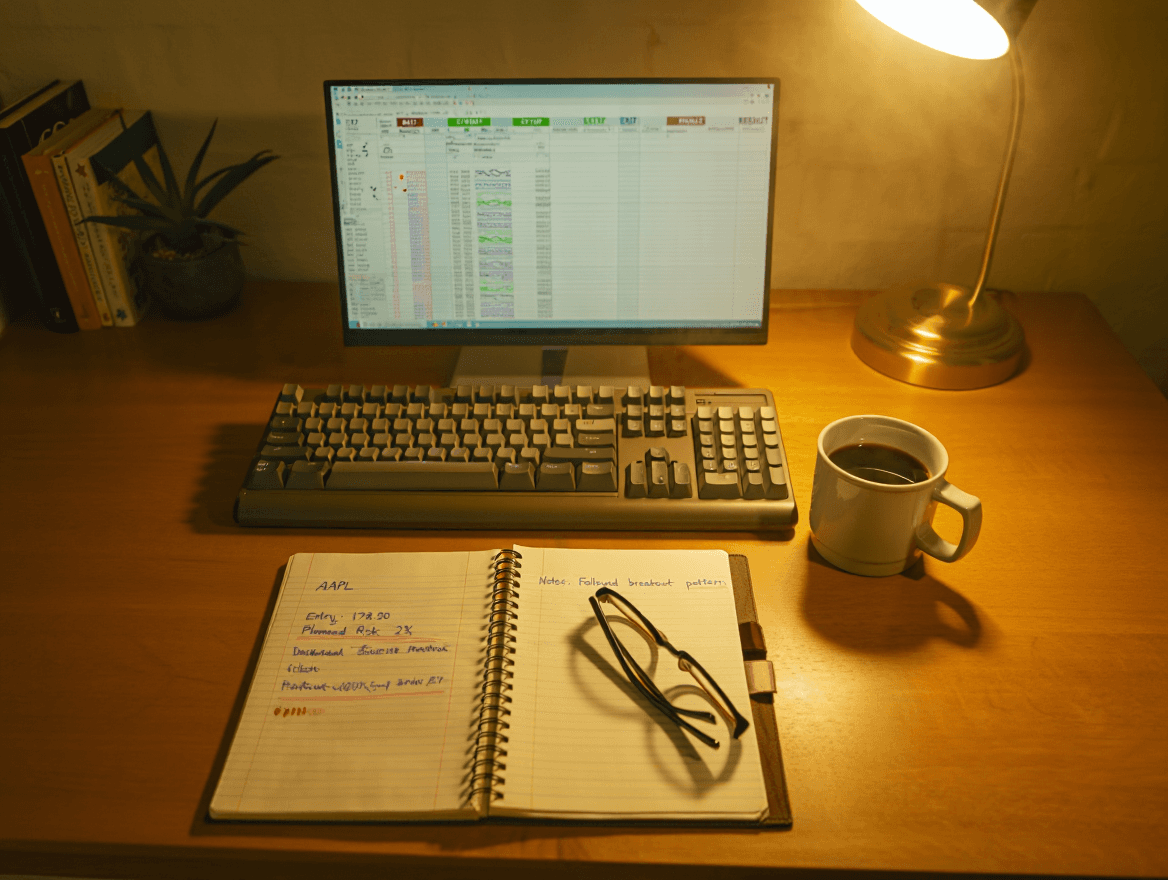
A trading journal is a record of decisions. It shows what a trader planned, what happened, and what needs improvement. Beginners often think a journal is only for profit and loss, but that is too narrow. The better use is to track behavior. A journal can show whether the trader followed the plan, entered late, ignored the spread, moved a stop, or traded because of boredom.
The simplest journal can be a spreadsheet. It should include date, symbol, setup, entry price, exit price, position size, planned risk, result, screenshot link, and notes. The notes are often the most valuable part. They explain why the trade was taken and whether the decision matched the original plan. Without notes, the trader only has numbers, and numbers alone rarely explain behavior.
A journal works especially well with paper trading. A beginner can practice logging simulated trades before real money is involved. This builds the habit when the emotional pressure is lower. Later, if the person moves to live trading, the process already feels normal. The routine becomes part of the trade, not an extra task after the fact.
Good journaling starts before entry. Write the reason for the trade, the invalidation point, and the planned exit. If the idea depends on support, resistance, volume, or a moving average, write that clearly. If the trade has no clear reason, that is useful information too. It may show that the trader is reacting instead of planning.
After the trade closes, record what happened without making excuses. Did the order fill as expected? Was the bid-ask spread wider than expected? Did delayed data cause confusion? Did the trader follow the stop? These questions connect to earlier lessons on real-time vs delayed stock quotes and bid-ask spread. A journal turns those lessons into personal evidence.
Review matters more than entry. At the end of each week, group trades by setup and mistake type. A trader might find that most losses come from entering too early, trading low-volume stocks, or exiting winners too quickly. That review can lead to one focused improvement for the next week. Trying to fix everything at once usually creates confusion.
Charts should be included whenever possible. A screenshot before entry and after exit can show whether the trade made sense. It can also reveal that the trader saw a pattern that was not there. Visual review is useful because memory changes after the result is known. A losing trade may look obvious in hindsight, but the screenshot shows what was visible at the time.
A journal should also track non-trade factors. Sleep, stress, time of day, news events, and rushed decisions can affect behavior. The goal is not to create a diary. The goal is to notice patterns. If the worst decisions happen after several trades in a row, the trader may need a daily trade limit. If mistakes happen near the open, the trader may need to wait longer before acting.
A trading journal does not guarantee improvement. It only gives honest feedback. The trader still has to read it and adjust. But without a journal, most beginners repeat the same errors because they rely on memory. A written record makes progress measurable, and measurable progress is easier to improve.
Return to the archive and continue with the next practical trading lesson.